
 by
by 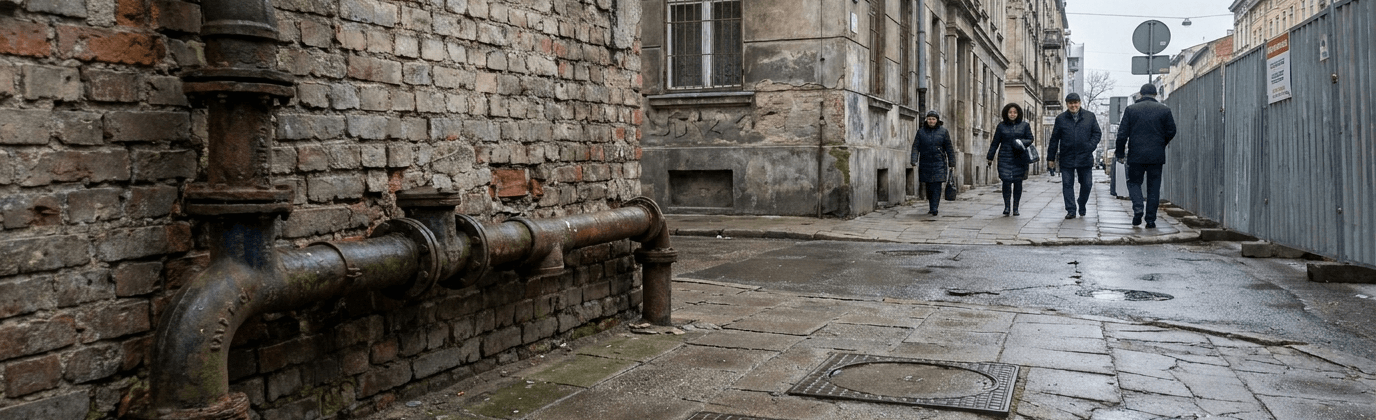
Water infrastructure usually fails long before the public notices because the earliest signs tend to show up inside inspection reports, maintenance backlogs, pressure irregularities, and internal operational decisions rather than in immediate visible collapse. By the time residents hear about a major break, boil-water notice, or treatment failure, the system has often already been under strain for months or years.
That gap matters because it shapes how the public understands infrastructure problems. Most people encounter water systems only when something goes obviously wrong. But pipes, valves, storage systems, treatment equipment, and distribution networks do not typically move from “fine” to “catastrophic” overnight. They decline through warning signs, repeated repairs, deferred maintenance, and institutional tradeoffs that rarely get public attention until the issue becomes too disruptive to ignore.
The EPA’s sustainable water infrastructure resources reflect the same underlying reality: water systems need long-term planning, asset management, and investment because visible failure is often the late stage of a much older problem.
Why the public usually sees the problem last
Most water infrastructure is out of sight. That physical invisibility creates a political invisibility too. When systems still deliver water to homes, leaders can defer hard decisions without immediate public backlash. A utility may know a section of pipe is deteriorating, that a plant upgrade is overdue, or that staffing and maintenance pressures are compounding risk. But those concerns often remain technical until a visible disruption forces them into public view.
This creates a recurring pattern: institutions know the system is weakening before residents do, but residents only learn the seriousness of the problem once the cost of delay becomes obvious. In that sense, infrastructure failure is often a communication failure too.
Deferred maintenance is rarely a neutral decision
Deferred maintenance often sounds like a budget issue, but it is really a risk management decision. Every time a repair is postponed or a replacement is pushed into a later cycle, the system becomes more dependent on luck. That does not mean every delay is reckless. But it does mean infrastructure stability is often being negotiated quietly, year after year, until the public experiences the consequences in the form of outages, notices, leaks, or emergency spending.
Once a system becomes reactive instead of preventive, it starts spending more energy chasing visible failures than preventing the next one. That is a hard position to recover from, especially in utilities already under pressure from aging assets and political resistance to rate increases.
| Early warning sign | What it may indicate |
|---|---|
| Frequent small breaks or repairs | A deteriorating distribution network |
| Repeated maintenance backlog | Deferred capital investment or staffing strain |
| Pressure fluctuations | System instability or localized weakness |
| Boil-water advisories after routine events | Low resilience in aging infrastructure |
| Emergency replacement spending | Planning failure or chronic underinvestment |
Why “everything is working” can be misleading
Public confidence in infrastructure often depends on a simple assumption: if water is still coming out of the tap, the system must be functioning adequately. But utilities can remain operational while becoming increasingly fragile. A system may still deliver service while relying on patchwork repairs, aging components, and operators managing around known weak points. That kind of fragile normal is common in infrastructure reporting, and it is exactly why accountability should not wait for dramatic failure.
What makes this difficult politically is that preventive investment rarely creates a visible win. Replacing a pipe before it fails is responsible, but it does not produce the same headline or urgency as a break. As a result, public systems often reward short-term calm more than long-term resilience.
Why these failures are also governance stories
Water infrastructure failure is never just an engineering story. It is also a governance story because the public consequences depend on planning, budgeting, communication, and institutional priorities. Who knew a system was vulnerable? When was the issue documented? Was the risk escalated? Was replacement delayed for political reasons? These questions matter because infrastructure weakness usually reflects administrative decisions as much as material wear.
That is why reporting on infrastructure should resist the temptation to frame every failure as a sudden surprise. Many so-called surprises are really long-developing institutional choices finally made visible.
Final thoughts
Water infrastructure fails long before the public notices because most of the real deterioration happens inside systems the public rarely sees and institutions often describe only in technical terms. By the time the public hears about a crisis, the underlying problem has often been developing through delay, weak planning, and accumulated risk for years. That is why serious infrastructure reporting has to focus not just on the break itself, but on the long lead-up that made the break possible.

Leave a Reply